Articles
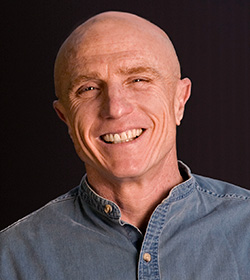
Randy Komisar on Leadership and Management
Creative people are just high functioning schizophrenics
New research shows a possible explanation for the link between mental health and creativity. By studying receptors in the brain, researchers at Karolinska Institute have managed to show that the dopamine system in healthy, highly creative people is similar in some respects to that seen in people with schizophrenia.
High creative skills have been shown to be somewhat more common in people who have mental illness in the family. Creativity is also linked to a slightly higher risk of schizophrenia and bipolar disorder. Certain psychological traits, such as the ability to make unusual or bizarre associations are also shared by schizophrenics and healthy, highly creative people. And now the correlation between creativity and mental health has scientific backing.
"We have studied the brain and the dopamine D2 receptors, and have shown that the dopamine system of healthy, highly creative people is similar to that found in people with schizophrenia," says associate professor Fredrik Ullen from Karolinska Institutet's Department of Women's and Children's Health, co-author of the study that appears in the journal PLoS ONE.
Just which brain mechanisms are responsible for this correlation is still something of a mystery, but Dr Ullen conjectures that the function of systems in the brain that use dopamine is significant; for example, studies have shown that dopamine receptor genes are linked to ability for divergent thought. Dr Ullen's study measured the creativity of healthy individuals using divergent psychological tests, in which the task was to find many different solutions to a problem.
"The study shows that highly creative people who did well on the divergent tests had a lower density of D2 receptors in the thalamus than less creative people," says Dr Ullen. "Schizophrenics are also known to have low D2 density in this part of the brain, suggesting a cause of the link between mental illness and creativity."
The thalamus serves as a kind of relay centre, filtering information before it reaches areas of the cortex, which is responsible, amongst other things, for cognition and reasoning.
"Fewer D2 receptors in the thalamus probably means a lower degree of signal filtering, and thus a higher flow of information from the thalamus," says Dr Ullen, and explains that this could a possible mechanism behind the ability of healthy highly creative people to see numerous uncommon connections in a problem-solving situation and the bizarre associations found in the mentally ill.
"Thinking outside the box might be facilitated by having a somewhat less intact box," says Dr Ullen about his new findings.
Source: Dosenation.com click here
Never panic
Interview Etiquette Manners-Meals and Interviews
Interview Dining Tips:
- Are you really nervous? Check out the restaurant ahead of time. That way you'll know exactly what's on the menu, what you might want to order and where the rest rooms are located.
- Be polite. Remember to say "please" and "thank you" to your server as well as to your host.
- Is the table full of utensils? My British grandmother taught me an easy way to remember what to use when. Start at the outside and work your way in. Your salad fork will be on the far left, your entree fork will be next to it. Your dessert spoon and fork will be above your plate.
- Liquids are on the right, solids on the left. For example, your water glass will be on the right and your bread plate will be on the left.
- Put your napkin on your lap once everyone is seated.
- Remember what your mother spent years telling you - keep your elbows off the table, sit up straight, and don't talk with your mouth full!
- Don't order messy food - pasta with lots of sauce, chicken with bones, ribs, big sandwiches, and whole lobsters are all dangerous.
- Don't order the most expensive entree on the menu.
- Do order food that is easy to cut into bite-size pieces.
- The polite way to eat soup is to spoon it away from you. There's less chance of spilling in your lap that way too!
- Break your dinner roll into small pieces and eat it a piece at a time.
- If you need to leave the table, put your napkin on the seat or the arm of your chair.
- When you've finished eating, move your knife and fork to the "four o'clock" position so the server knows you're done.
- Remember to try and relax, listen, and participate in the conversation.
- It's wise not to drink alcohol during an interview. Interviewing is tough enough without adding alcohol to the mix.
- Put your napkin on the table next to your plate.
- Let the prospective employer pick up the tab. The person who invited you will expect to pay both the bill and the tip.
- Remember to say "thank you." Consider also following-up with a thank you note which reiterates your interest in the job.
Source: About.com
What lies on the other side of death
Play to achieve your Goal
We live in a Nation where...
Where Pizza reaches home faster than Ambulance, police and firetruck.
Where you get car loan @ 5% and education loan @ 12%
Where rice is Rs 40/- per kg but sim card is free
Where a millionaire can buy a cricket team but don't donate any money to charity
Where the foot wears and inner wears, we wear, are sold in AC showrooms, but vegetables and fruits, that we eat, are sold at footpath
Where everybody wants to be famous but nobody wants to follow the path to be famous
Where we make lemon juices with artificial flavors and dish wash liquids with real lemon
Where people standing at tea stall reading an article about child labour from a newspaper and say, "yaar bachhon se kaam karvane wale ko to phansi par chadha dena chahiye" and then they shout "Oye chhotu 2 chaii laa..."
Do think about it!
13 Ways to Cheer Up
INCREDIBLE INDIA.
It is home to more than a million people.Houses generally have no door numbers.
Everyday,there are at least 4,000 ordinary letters to be delivered, a hundred registered ones, 150 speedposts, at least four parcels and about 15 money orders. There are some company annual reports as well to be delivered. Rather than numbers, it is the locals and shopkeepers who help postmen to locate the addressee.
No wonder, each postman, covering about 25 km every day, takes about two years to be a pro.
It is also home to several thriving small-scale industries such as embroidered garments, leather goods, pottery and plastic. According to reports, Dharavi's products sell domestically and abroad. It's annual business turnover is estimated at more than $650m.
Bibliography: Article on 'Times of India->How postmen sort Dharavi maze
The loser's guide to getting lucky
Ten years ago, I set out to examine luck.
I wanted to know why some people are always in the right place at the right time, while others consistently experience ill fortune.
I placed advertisements in national newspapers asking for people who felt consistently lucky or unlucky to contact me.
Hundreds of extraordinary men and women volunteered for my research and, over the years, I have interviewed them, monitored their lives and had them take part in experiments.
The results reveal that although these people have almost no insight into the causes of their luck, their thoughts and behaviour are responsible for much of their good and bad fortune.
Take the case of seemingly chance opportunities. Lucky people consistently encounter such opportunities, whereas unlucky people do not.
I carried out a simple experiment to discover whether this was due to differences in their ability to spot such opportunities.
I gave both lucky and unlucky people a newspaper, and asked them to look through it and tell me how many photographs were inside.
I had secretly placed a large message halfway through the newspaper saying: "Tell the experimenter you have seen this and win £250."
This message took up half of the page and was written in type that was more than two inches high.
Anxiety
It was staring everyone straight in the face, but the unlucky people tended to miss it and the lucky people tended to spot it.
Unlucky people are generally more tense than lucky people, and this anxiety disrupts their ability to notice the unexpected.
As a result, they miss opportunities because they are too focused on looking for something else.
They go to parties intent on finding their perfect partner and so miss opportunities to make good friends.
They look through newspapers determined to find certain types of job advertisements and miss other types of jobs.
Self-fulfilling prophecies
Lucky people are more relaxed and open, and therefore see what is there rather than just what they are looking for.
My research eventually revealed that lucky people generate good fortune via four principles.
They are skilled at creating and noticing chance opportunities, make lucky decisions by listening to their intuition, create self-fulfilling prophesies via positive expectations, and adopt a resilient attitude that transforms bad luck into good.
Towards the end of the work, I wondered whether these principles could be used to create good luck.
I asked a group of volunteers to spend a month carrying out exercises designed to help them think and behave like a lucky person.
Dramatic results
These exercises helped them spot chance opportunities, listen to their intuition, expect to be lucky, and be more resilient to bad luck.
One month later, the volunteers returned and described what had happened. The results were dramatic: 80% of people were now happier, more satisfied with their lives and, perhaps most important of all, luckier.
The lucky people had become even luckier and the unlucky had become lucky.
Finally, I had found the elusive "luck factor" .
Here are Professor Wiseman's four top tips for becoming lucky:
- Listen to your gut instincts - they are normally right
- Be open to new experiences and breaking your normal routine
- Spend a few moments each day remembering things that went well
- Visualise yourself being lucky before an important meeting or telephone call. Luck is very often a self-fulfilling prophecy
Quotes in the article-:
Those who have succeeded at anything and don't mention luck are kidding themselves Larry King
Everything in life is luck -Donald Trump
Luck is believing you're lucky Tennessee Williams
I am a great believer in luck, and I find the harder I work, the more I have of it
Thomas Jefferson
By Professor Richard Wiseman
University of Hertfordshire
source url: http://news.bbc.co.uk/2/hi/3335275.stm
My Deaf Wife !
A man feared his wife wasn’t hearing as well as she used to and he thought she might need a hearing aid. Not quite sure how to approach her, he called the family Doctor to discuss the problem.
The Doctor told him there is a simple informal test the husband could perform to give the Doctor a better idea about her hearing loss.
Here’s what you do, said the Doctor, “Stand about 40 feet away from her, and in a normal conversational speaking tone see if she hears you. If not, go to 30 feet, then 20 feet, and so on until you get a response.”
That evening, the wife is in the kitchen cooking dinner, and he was in the den. He says to himself, “I’m about 40 feet away, let’s see what happens.”
Then in a normal tone he asks, ‘Honey, what’s for dinner?”
No response!
So the husband moves closer to the kitchen, about 30 feet from his wife and repeats, “Honey, what’s for dinner?”
Still no response…
Next he moves into the dining room where he is about 20 feet from his wife and asks, Honey, what’s for dinner?”
Again he gets no response…
So he walks up to the kitchen door, about 10 feet away. “Honey, what’s for dinner?”
Again there is no response…
So he walks right up behind her. “Honey, what’s for dinner?”
“John, for the FIFTH time I’ve said, CHICKEN!!!”
MORAL OF THE STORY: The problem may not be with the other person as we always think, could be very much within us!
Family Budget-recommendation by Prerana Salaska
Since Mr Suman is the only earning member with two dependents, including a one-yearold infant, we feel that he needs to scale up his cover so that he is capable of meeting at least 15 years expenses. That means a sum assured of at least Rs 25 lakh more. This could cost Rs 6,500 p.a. He would also need to be covered for health insurance, which would entail a yearly premium of Rs 6,000.
His savings bank balance and time deposit should serve as a cushion for any emergency needs, should they arise. His current investments are skewed towards debt investments returning fixed returns. His current asset allocation is almost 80% in debt, which needs to be changed to 70% equity for his age, goals and long-term planning. He could look at directing his investment in ELSS and bank deposits maturing in the coming months towards equities to better returns.
Goal-Oriented Planning
Since for the purchase of the car, down payments and instalments will be wholly-financed by salary arrears and future incremental income, the impact on current financial flows could be considered irrelevant till the time of completion of EMI payments. However, one needs to consider that a car entails additional expenditure such as fuel costs, maintenance, servicing costs and insurance, which could amount to around 30-50 % of EMI costs. Keeping his various goals in mind, he could consider looking at a cheaper car range, which could take care of the ancillary expenses. Alternatively, he could defer purchasing the car till a further improvement in income, if he thinks buying a house is more important.
Purchasing a House
A house worth Rs 35 lakh will involve a down payment of nearly Rs 7 lakh and an EMI of Rs 20,000, for a 20-year tenure. Assuming that he opts to not buy the car and considering the current surpluses, he would still be short of EMI payments by approximately Rs 5,000, three years hence. We suggest that this decision could be deferred for another five years or until there is a marked improvement in salary. We have assumed that he presently stays with his parents and there will be no saving on rent by buying his own house.
Child Education Planning
Assuming that he would need a corpus of Rs 25 lakh for his kid in his 18th year, he should create an inflation-adjusted corpus of Rs 67.31 lakh in 17 years. Various investments in MFs would materialise to Rs 11.55 lakh, 17 years hence or in the childs 18th year. Considering his current cash flows, he could take an education loan then.
Retirement Planning
Maintaining his current lifestyle means Rs 2.40 lakh p.a, which translates into Rs 13 lakh p.a in his 60th year, after 29 years. Assuming a life span of 90 years, he needs to plan for the next 30 years at 13 lakh p.a (Rs 1,08,000 p.m), adjusting for inflation. This means a retirement corpus of close to Rs 2.26 crore when he is 60. His current investments would yield a corpus of around Rs 1.79 crore, which means that currently there is a deficit of Rs 48 lakh. Surplus after the recommended Rs 3,500 SIP in ELSS, is around Rs 3,500 p.m. Out of this, Rs 3,000 can be invested in balanced fund SIPs to yield Rs 48 lakh in 29 years at 8% p.a return.
Rationalising between goals
His current shortfall in retirement corpus needs to be revisited yearly and the plan tweaked accordingly. If he feels that buying a house or providing for his childs education constitute more pressing issues than planning for a comfortable retirement, he could utilise a portion of retirement allocation towards these needs, as required. Shortfall in retirement corpus, if any, could be met through means such as reverse mortgage in future.
By Prerana Salaskar-Apte , a certified financial planner, is a partner with The Tipping Point
source: Economic times dated 12th Jan.'10
Web url: Click here
Five mistakes managers make most often
————————————————————————————————————————————————————————————————————————————
Some management mistakes are so common that you can actually compile them into a list. If you’re a manager struggling to find out why your team is dysfunctional, take a look at the behaviors in this list and see if any look familiar.
1. Not communicating with the team. I know, I know, you’ve seen the advice for communicating so often you want to smack someone. I want to smack myself for saying it so often. But you know what? Unless you’re on the front line heading into a military battle, you have to take time to communicate with your team members. You don’t have to pass on every shred of information you’ve gotten from upper management on a new initiative, but you have to give them enough information to know why they’re being asked to do what they’re being asked to do. The more information your team members have, the more ownership they’ll feel in the process, and the better they’ll perform.
2. Continually focusing on the negative. Thinking in negative terms is a common result from working in a reactive environment, which IT tends to be. In that environment, IT spends most of its time keeping the negative to a minimum with goals such as decreasing network downtime or putting out fires. A good leader has to make an effort to recognize the positive. (How about mentioning increased uptime?) Recognize your people for the forward progress they make and not just for their efforts to keep things from getting worse.
3. Changing policy due to one person. The term “team” makes some managers think they have to treat everyone the same way. This is true in many cases, but if one person has a performance issue, don’t take across-the-board measures to correct it just because you’re afraid of confronting that one team member. If one team member is failing to complete some duties in a timely manner, don’t introduce a policy forcing the whole team to submit weekly progress reports. Deal only with the one with the issues.
4. Not understanding the needs and concerns of your team. Some IT leaders find it virtually impossible to tell their bosses that something can’t be done. The team’s bandwidth or overall state of mind takes a backseat to real or imagined glory of being the guy who “gets things done.” Good managers don’t over-promise on their team’s behalf.
5. Never admitting you’re wrong or never taking responsibility. There’s risk involved in being a manager of a team. And that risk is, if your team fails at something, you should and will be the one held accountable. It doesn’t matter if one team member screwed something up; your job was to manage the overall process of all the team members, and you didn’t do it. So suck it up and own up to that. On a related note, if one of your actions caused a kink in a project, admit it. It’s ironic but not owning up to a problem damages your credibility with your team more than simply saying, “I was wrong.”
Author: Toni Bowers, Toni Bowers is the Head Blogs Editor of TechRepublic. She has been in the publishing industry for 20 years, with concentration in IT-related topics. She has edited newsletters, books, and web sites pertaining to software, IT career, and IT management issues.
Url:http://blogs.techrepublic.com.com/career/?p=796
website: http://www.techrepublic.com
The Mayonnaise Jar
When things in your life seem, almost too much to handle, When 24 Hours in a day is not enough, Remember the mayonnaise jar and 2 cups of coffee.
A professor stood before his philosophy class and had some items in front of him.
When the class began, wordlessly, He picked up a very large and empty mayonnaise jar
And proceeded to fill it with golf balls. He then asked the students, if the jar was full. They agreed that it was.
The professor then picked up a box of pebbles and poured them into the jar. He shook the jar lightly. The pebbles rolled into the open Areas between the golf balls. He then asked the students again if the jar was full.They agreed it was.
The professor next picked up a box of sand and poured it into the jar.Of course, the sand filled up everything else. He asked once more if the jar was full. The students responded with a unanimous 'yes.'
The professor then produced two cups of coffee from under the table and poured the entire contents into the jar, effectively filling the empty space between the sand. The students laughed.
'Now,' said the professor, as the laughter subsided,'I want you to recognize that this jar represents your life.
- The golf balls are the important things - family, children, health, Friends, and Favorite passions –Things that if everything else was lost and only they remained, Your life would still be full.
- The pebbles are the other things that matter like your job, house, and car.
- The sand is everything else --The small stuff.
'If you put the sand into the jar first,' He continued, there is no room for the pebbles or the golf balls.The same goes for life. If you spend all your time and energy on the small stuff, You will never have room for the things that are important to you.
So... Pay attention to the things that are critical to your happiness. Play With your children. Take time to get medical checkups. Take your partner out to dinner. There will always be time to clean the house and fix the disposal. 'Take care of the golf balls first --The things that really matter. Set your priorities. The rest is just sand.'
One of the students raised her hand and inquired what the coffee represented.
The professor smiled. 'I'm glad you asked'. It just goes to show you that no matter how full your life may seem, there's always room for a couple of cups of coffee with a friend.'
You cannot multiply wealth by dividing it
An economics professor at a local college made a statement that he had never failed a single student before but had once failed an entire class. That class had insisted that socialism worked and that no one would be poor and no one would be rich, a great equalizer.
The professor then said, "OK, we will have an experiment in this class on socialism. All grades would be averaged and everyone would receive the same grade so no one would fail and no one would receive an A.
After the first test, the grades were averaged and everyone got a B. The students who studied hard were upset and the students who studied little were happy. As the second test rolled around, the students who studied little had studied even less and the ones who studied hard decided they wanted a free ride too so they studied little. The second test average was a D! No one was happy. When the 3rd test rolled around, the average was an F.
The scores never increased as bickering, blame and name-calling all resulted in hard feelings and no one would study for the benefit of anyone else.
All failed, to their great surprise, and the professor told them that socialism would also ultimately fail because when the reward is great, the effort to succeed is great but when government takes the reward away, no one will try or want to succeed.
Could not be any simpler than that.
What a profound short little paragraph that says it all
"You cannot legislate the poor into freedom by legislating the wealthy out of freedom. What one person receives without working for, another person must work for without receiving. The government cannot give to anybody anything that the government does not first take from somebody else. When half of the people get the idea that they do not have to work because the other half is going to take care of them, and when the other half gets the idea that it does no good to work because somebody else is going to get what they work for,that my dear friend, is about the end of any nation. You cannot multiply wealth by dividing it."
~~~~ Dr. Adrian Rogers, 1931
Questions of real national security
Policies with regard to agriculture, education and health need to change in order to ensure a meaningful and wide-ranging security for this country.
The arms business is probably the second largest business in the world after the food business. It is, therefore, not surprising that we consider national security to be just what the defence and allied services provide the country.
But there could not be a greater illusion than that. With all the weapons in the world, we must not consider ourselves secure unless we have agriculture security (which is synonymous with food security, farmers security and rural sector security), education security, and health security. If India were secure on these fronts, there would have been no so-called left-wing extremism affecting a quarter of the districts: in many areas the governments writ does not seem to run now.
We waived farmers loans, but did we take steps to empower them so that they do not need to take any more loans? What we did was for political gain. For what we did not do, the explanation is that we pay only lip service to farmers security.
Agriculture security concerns seeds, agro-chemicals, water, power and soil. It involves the marriage of traditional and modern agricultural practices; the de facto empowerment of panchayats and women; the marketing of agro-products at fair prices. Such security requires the provision of sources of augmentation of income to agriculturists and village-dwellers through the development of traditional arts and crafts, medicinal plants, and the unparalleled repertoire of fruits and vegetables. Also involved here are organic farming; the use of post-harvest technologies; orchid tissue culture (for example, Arunachal Pradesh has 650 varieties of orchids which, if exploited, can bring the State an income of Rs.10,000 crore a year), mushroom culture, and the appropriate use of fisheries and marine wealth. Other elements include intelligent energy use; the empowerment of the rural sector with knowledge; microcredit; the integration of rural and urban sectors; appropriate research such !
as on organic farming, bio-pesticides, and the development of varieties with all the advantages of hybrids, that would benefit India: research that is being encouraged under the Indo-U.S. Knowledge Initiative on Agriculture would be of greater use to the U.S. The integration of the National Rural Employment Guarantee Scheme with carefully thought-out developmental plans; prevention and management of disasters such as floods and famine and the cleaning up of land records are also not to be forgotten. Then come a system to prevent, detect and take care of bio-terrorism against agriculture. Emerging new and exotic diseases of plants and animals need to be tackled by setting up centres of plant and animal disease control. Climate change has to be addressed, bearing in mind the fact that a one-degree rise of temperature can bring down the production of wheat by 5 million tonnes. None of the above constituents of agriculture security has been adequately taken care of.
If a power from outside India wishes to control this country's destiny today, it is not going to drop a nuclear bomb: it only has to control Indian agriculture. And to do that, it needs to control just seed and agro-chemicals production. The Indian government is not cognizant of this: otherwise, more than 30 per cent of the country's seed business today would not have been under the control of multinational seed companies. Indeed, a moratorium on genetically modified (GM) crops would have been declared until preparations were made to test them adequately.
As regards education, the most important division in the country today is between those (numbering less than 10 per cent) who have access to good education and those (adding up to more than 90 per cent) who have only education without any value. The former are the rulers and the latter are the ruled.
With the extensive commercialisation of both school and higher (including professional) education leading to a university degree, education has become a commodity to be sold and purchased. India is perhaps the only country in which this has happened so extensively, with the buyer getting the minimum that the seller can get away with. So a private school has no hesitation in charging Rs.10,000 as laboratory fees for a Class I student, and there is often no correlation between what is charged and for what amount the receipt is given. You could sometimes get your required registration and university affiliation for an engineering, medical, pharmacy or nursing college that you are setting up by buying off the inspection team and officers of the accreditation authority. It is no surprise, therefore, that 80 per cent of the engineering graduates (in fact, graduates in all areas) India produces are unemployable.
Till the 1960s, there was no commercialisation of education, and government-run or trust-run schools were uniformly good. The children of the rich and the poor went to the same school, and the rich and the powerful had a stake in government schools. Now only the poor send their children to government schools; they might as well not do that too for, at times the school may exist only in name or the designated teacher may not come for weeks on end. Or, if he is a little more considerate, he may send a surrogate replacement for 20 per cent of his salary which he would compensate for by engaging in a more lucrative business activity during school hours.
The Right to Education Bill that has just been passed by the Rajya Sabha and the Lok Sabha, if it is notified by the government, will only be a boon for those who make money in the school business, while it will be a disaster for those who have no access to education today. Unfortunately, that is what the rich and the ruling classes want. For education is the most important weapon of empowerment, and the best defence against exploitation.
To be truly independent as a nation, and to maintain national dignity, India needs a knowledge society in which every citizen has a minimum amount of knowledge. The country can do that only by decommercialising and decommodifying education and setting up a common school system (for which there has been a continuous demand since the days of the Kothari Commission in the early-1960s) in which the students of the rich and the poor in the same neighbourhood would be studying in the same school without paying any fees, and with a new curricular framework. That is the only way for us to ensure education security.
As regards health security, the lack of a sense of ethics in the medical profession (with some exceptions granted), and corruption in the Central Government Health Service, in the corporate health sector, and in the Medical Council of India, are matters of common knowledge. Inflated bills, pay-offs, unnecessary medical tests and a lack of general physicians are all well-known and well-documented phenomena. In Bhopal on September 24, 2008, a gas tragedy victim was denied medical assistance in the Bhopal Memorial Hospital which was permitted to be set up by Union Carbide expressly for the gas tragedy victims; he died the next day while waiting in the hospital. But who cares?
Our rural health-care scheme covers just a few diseases. Contrast our health-care efforts with that of Chinas recently announced well-thought-of programme of spending $124 billion to modernise its national health-care system in the next three years.
We seem to really care only about the requirements of countries such as the U.S., the multinational companies, and the top 15-20 per cent of our rich and the powerful. According to an article in The Lancet (May 16, 2009), a small country like Ghana lost $60 million since 1951 which it spent on training health workers who have migrated to the U.S., the U.K. and Canada. The U.K. alone saved 103 million in training costs by importing Ghanians. It is unclear what the corresponding figures are for India and the U.S., but there is no doubt that the U.S. will be the winner.
Ironically, the Indian government can do everything required to ensure agriculture, education and health security. The Green Revolution was based on our own varieties and not seed companies hybrids. Some of the best schools in the country even today are the Central Schools, or Kendriya Vidyalayas. And many of the best institutes of higher learning in every sector are government institutions. Some of our best hospitals, such as the All India Institute of Medical Sciences in Delhi, the Post Graduate Institute of Medical Education and Research in Chandigarh, and the Christian Medical College Hospital in Vellore, are run by the government or a trust without a profit motive.
If the present Indian policies with regard to agriculture, education and health security continue to be pursued, there could well be a civil war in the next 10 to 15 years.
(Dr. P.M. Bhargava is former vice-chairman, National Knowledge Commission.)
Page URL: http://www.thehindu.com/2009/08/11/stories/2009081155790800.htm
Copyright: 1995 - 2006 The Hindu
Republication or redissemination of the contents of this screen are expressly
prohibited without the consent of The Hindu
Why China may attack India by 2012
There are multiple reasons for a desperate Beijing to teach India the final lesson, thereby ensuring Chinese supremacy in Asia in this century. The recession that shut the Chinese exports shop is creating an unprecedented internal social unrest. In turn, the vice-like grip of the Communists' over the society stands severely threatened.
Unemployment is on the increase. The unofficial estimate stands at whopping 14 percent. Worldwide recession has put 30 million people out of jobs. Economic slowdown is depleting the foreign exchange reserves. Foreign investors are slowly shifting out. To create domestic market, the massive dole of loans to individuals is turning out to be a nightmare. There appears to be a flight of capital in billions of dollars in the shape of diamond and gold bought in Hong Kong and shipped out in end 2008.
Internal unrest is making China jittery
The fear of losing control over the Chinese masses is forcing the Communists to compulsorily install filtering software on new computers to crush dissent on the Internet, even though it is impossible to censor in entirety the flow of information as witnessed recently in Tibet, Xinjiang and Iran.
The growing internal unrest is making Beijing jittery.
The external picture appears to be equally dismal. The unfolding Barack Obama strategy seems to be scoring goals for democracy and freedom without firing a single shot. While Geoge Bush unwittingly united and arrayed against himself Islamic countries and radical Islam worldwide, Obama has put radical Islam in disarray by lowering the intra societal temperature vis- -vis America and the Muslim world. He deftly hints at democracy in his talk without directly threatening any group or country and the youth picks it up from there as in Iran. With more and more Chinese citizens beginning to demand political freedom, the future of the communists is also becoming uncertain. The technological means available in 21st century to spread democracy is definitely not conducive for the totalitarian regime in Beijing.
India's democracy is an eyesore for China
India's chaotic but successful democracy is an eyesore for the authoritarian regime in Beijing. Unlike India, China is handicapped as it lacks the soft power- an essential ingredient to spread influence. This further adds fuel to the fire.
In addition, the growing irrelevance of Pakistan, their right hand that operates against India on their behest, is increasing the Chinese nervousness. Obama's Af-Pak policy is primarily a policy that has intelligently set the thief to catch the thief. The stated withdrawal from Iraq by Americans now allows them to concentrate its military surplus on the single front to successfully execute the mission. This surplus, in combination with other democratic forces, can enable the Americans to look deep in to resource rich Central Asia, besides containing China's expansionist ambitions.
Why India is an ideal target for the Chinese
To offset this adverse scenario, while overtly pretending to side with the West, the Chinese covertly ordered their other proxy, North Korea, to test underground nuclear explosion and carry out trials of missiles that threaten Japan and South Korea.
The Chinese anxiety is understandable. Under Bush's declared policy of being 'a strategic competitor' alongside the 'axis of evil', they shared a large strategic maneuverability with others of similar hues. However, Obama policies wisely deny such a luxury by reclaiming more and more international strategic space ceded by the previous administration.
The Communists in China, therefore, need a military victory to unite the disillusioned citizenry behind them. This will assist to market a psychological perception that the 21st century belongs to China and to commemorate their deep belief in the superiority of the Chinese race. To divert attention from the brewing internal dissent is essential to retain the Communist Party's hold on power. In an autocratic system normally the only fodder to unite the citizenry is by raising their nationalistic feelings.
The easy method for Beijing to heighten the feeling of patriotism and thus national unity is to design a war with an adversary. They believe that this will help them to midwife the Chinese century too. That is the end game rooted in the firm belief of the Communists that Chinese race is far superior to Nazi Germany and is destined to 'Lord over the Earth'.
At present, there is no overall cost benefit ratio in integrating Taiwan by force with the mainland since under the new dispensation in Taipei, the island is 'behaving' itself. Also, the American presence around the region is too strong for comfort. There is also the factor of Japan to take into account. Though Beijing is increasing its naval presence in South China Sea to coerce into submission those opposing its claim on the Sprately Islands, at this point of time in history it will be unwise for the recession-hit China to move against the Western interests, including Japan.
Therefore, the most attractive option is to attack a soft target like India and forcibly occupy its territory in the Northeast.
China is worried by India's alliance with the US
Ideally, the Chinese believe that the east-wind should prevail over the west-wind. However, despite their imperial calculations of the past, they lag behind the West, particularly America by many decades.
Hence, they want the east-wind to at least prevail over the other east-wind, i.e., India, to ensure their dominance over Asia. Beijing's cleverly raising the hackles on its fabricated dispute in Arunachal Pradesh to an alarming level is the preparatory groundwork for imposing such a conflict on India. A sinking Pakistan will team up with China to teach India 'the final lesson'.
The Chinese leadership wants to rally its population behind the Communist rule. As it is, Beijing is already rattled, with its proxy Pakistan, now literally embroiled in a civil war, losing its sheen against India. Above all, it is worried over the growing alliance of India with the United States and the West, because the alliance has the potential to create a technologically superior counterpoise.
Is India prepared for the Chinese threat?
All these three concerns of Chinese Communists are best addressed by waging a war against pacifist India to achieve multiple strategic objectives. But India, otherwise the biggest challenge to the supremacy of China in Asia, is least prepared on ground to face the Chinese threat.
How will India face and respond vigorously to repulse the Chinese game plan? Will Indian leadership be able to take the heat of war? Have they laid the groundwork adequately to defend India? Is Indian military equipped to face the two-front wars by Beijing and Islamabad? Is the Indian civil administration geared to meet the internal security challenges that the external actors will sponsor simultaneously through their doctrine of unrestricted warfare?
The answers are an unequivocal 'no'. Pacifist India is not ready by a long shot either on the internal or the external front.
It is said that long time back, a king with an excellent military machine at his disposal could not stomach the violence involved in winning wars. So he renounced war in victory. This led to the rise of the pacifist philosophies. The state either refused to defend itself or neglected the instruments that could defend it.
Any 'extreme' is dangerous, as it tends to create imbalance in statecraft. We saw that in the unjust unilateral aggression in Iraq. It diminished the American aura and recessed the economy. China's despotic regime is another extreme, scared to permit political dissent. This will fuel an explosion worse than the Tiananmen Square. Despite use of disproportionate force and demographic invasion of Tibet, Beijing's hold remains tenuous. Pakistan's over-aggressive agenda in the name of jihad haunts it now to the point of fragmentation of the state.
How we must face the threat
Similarly, India's pacifism is the other extreme. More 26/11-like attacks will occur on a regular basis as it infects policymaking. Such extreme postures on either side invariably generate wars. Armed with an aggressive Wahabi philosophy, Pakistan, in cohort with China, wants to destabilise a pacifist India. India's instruments of state steeped in pacifism are unable to rise to its defence.
In the past 60 years, instead of offering good governance, the deep-rooted pacifism contributed to the civil administration ceding control of 40 per cent of the Union's territory to the Maoists and ten percent to the insurgents, effecting a shrinking influence internally, as well in the 'near abroad'.
India must rapidly shift out from its defeatist posture of pacifism to deter China. New Delhi's stance should modify, not to aggression, but to a firm assertion in statecraft. The state must also exclusively retain the capability of intervention by use of force internally as well as externally. If it permits the non-state actors to develop this capability in competition, then the state will whither away. On the contrary, the state machinery should ensure a fast-paced development in the Red Corridor even it if has to hold Maoists' hostage at gunpoint. The state's firm and just intervention will dissolve the Maoist movement.
Keeping in view the imminent threat posed by China, the quickest way to swing out of pacifism to state of assertion is by injecting military thinking in the civil administration to build the sinews. That will enormously increase the deliverables on ground -- from Lalgarh to Tawang.
Columnist: Bharat Verma, Editor, Indian Defence Review.
Source: rediff.com
Page url: click here
Morals
They all gathered around the surgery table with the body covered with a White sheet. The professor started the class by telling them, 'In Veterinary Medicine it is necessary to have two important qualities as a Doctor: The first is that you not be disgusted by anything involving the Animal body'. For an example, the Professor pulled back the sheet, touched his finger in the mouth of the dead pig, withdrew it and put his Finger in his mouth. 'Go ahead and do the same thing,' he told his students.
The students freaked out, hesitated for several minutes. But eventually took turns putting their finger in the mouth of the dead pig and tasted in their mouth.
When everyone finished, the Professor looked at them and said,'The Second most important quality is observation. I touched with my middle Finger and tasted on my index finger. Now learn to pay attention'...
Moral of the story:Life is tough, but it's a lot tougher when you're Stupid....
Source: forwarded emails
Chinese Fables-The Pretty Lady
The big monk carried the lady across the river and the small monk followed unhappily. When they crossed the river, the big monk let the lady down and they parted ways with her. All along the way for several miles, the little monk was very unhappy with the act of the big monk. He was making up all kinds of accusations about the big monk in his head. This got him madder and madder.
But he still kept quiet. And the big monk had no inclination to explain his situation.
Finally, at rest-point many hours later, the little monk could not stand it any further, he burst out angrily at the big monk. "How can you claim yourself a devout monk, when you seize the first opportunity to touch a female, especially when she is very pretty. All your teachings to me make you a big hypocrite." The big monk looked surprised and said, "I had put down the pretty lady at the river bank many hours ago, how come you are still carrying her along?"
[This very old Chinese zen story reflects the thinking of many people today. We encounter many unpleasant things in our life, they irritate us and they make us angry. Sometimes, they cause us a lot of hurt, sometimes they cause us to be bitter or jealous. But like the little monk, we are not willing to let them go away. We keep on carrying the baggage of the "pretty lady" with us. We let them keep on coming back to hurt us, make us angry, make us bitter and cause us a lot of agony. Why? Simply because we are not willing to put down or let go of the baggage of the "pretty lady". We should let go of the pretty lady immediately after crossing the river, immediately after the unpleasant event is over. This will immediately remove all our agonies. There is no need to be further hurt by the unpleasant event after it is over. It is just that simple.
Chinese Fables-The Turtles
The family consented and the little turtle left. Three years passed and the little turtle had not returned. Five years ... six years... then on the seventh year of his absence, the oldest turtle could no longer contain his hunger. He announced that he was going to eat and begun to unwrap a sandwich. At that point the little turtle suddenly popped out from behind a tree shouting, "SEE! I knew you wouldn't wait. Now I am not going to go get the salt."
[Some of us waste our time waiting for people to live up to our expectations. We are so concerned about what others are doing that we don't do anything ourselves.]
Tags
- Brands-Media-Advertising (2)
- Career (14)
- Credit Market Conditions (3)
- Economics (4)
- Emails (1)
- Entrepreneur (1)
- Files (2)
- God (1)
- Life (3)
- Life Style (3)
- Morals (9)
- Notes (6)
- Stock Market (2)
- The Mayonnaise Jar (1)
- Things to Ponder (2)